
HQ Tel. +49(0)89-235-16-801
US Tel. +1 765-780-7139
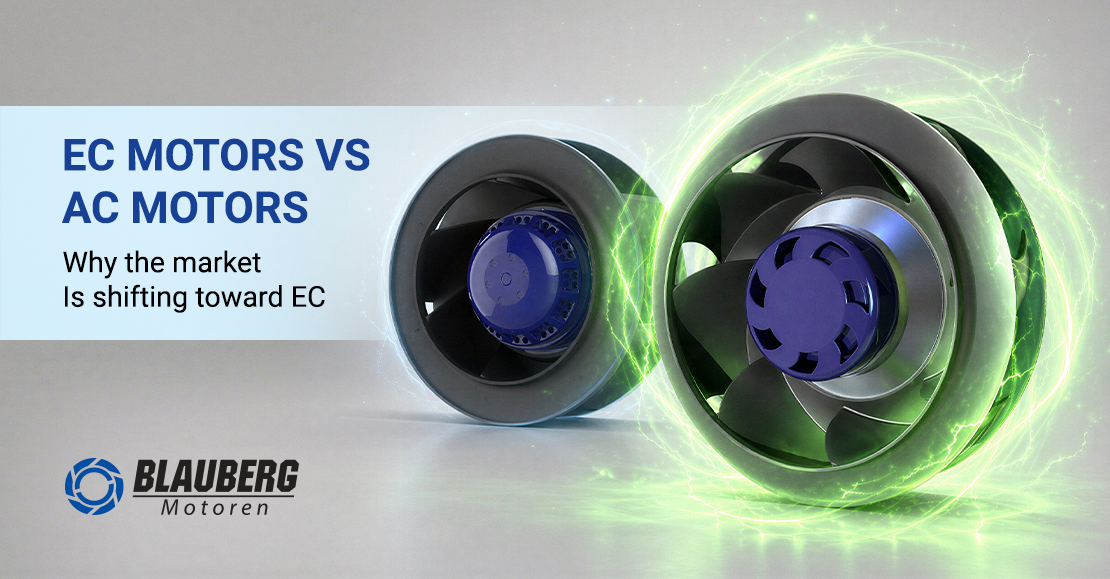
The industrial ventilation market is undergoing a significant transformation. More and more manufacturers of ventilation equipment are moving away from traditional AC-motor-based solutions in favor of EC technology. But what is the fundamental difference between an EC fan and an AC fan and why is this transition inevitable?
The AC fan is a proven technology that has been in use for decades. However, its key weakness is its fixed rotational speed and low efficiency in converting electrical energy into mechanical energy. Most of the unused electrical energy is converted into heat, which leads to an increase in motor temperature and additional system cooling costs.
Thanks to its built-in electronics and precise speed control, the EC fan can be 2-3 times more efficient than an AC solution - depending on the operating mode and conditions.
Key advantages of the EC fan include:
Another factor is compliance pressure. The ErP directive is steadily raising energy efficiency requirements for ventilation equipment in Europe, and this trend will only continue to grow.
Here are three key reasons why manufacturers are switching to EC today:
The transition to EC is not a trend, but a technological necessity. Lower power consumption, lower operating temperatures, and modern control interfaces make EC fans the obvious choice for new designs.